Mistral Unveils Medium 3.5 Model and Cloud Agent Features in Le Chat and Vibe
Introduction
Mistral has taken a significant step forward in the AI landscape with the release of its latest language model, Mistral Medium 3.5, and the introduction of enhanced cloud-based agent capabilities within its popular platforms, Le Chat and Vibe. These developments mark a strategic push to bring sophisticated, single-system reasoning, instruction following, and coding abilities to a wider audience, while also enabling more dynamic, remote interactions through AI agents.
Mistral Medium 3.5: A New Benchmark in Model Design
At the heart of this update is Mistral Medium 3.5, a model boasting 128 billion parameters. Unlike many large language models that require specialized hardware or multiple systems to handle diverse tasks, Medium 3.5 is designed to unify instruction following, reasoning, and coding within a single, efficient framework. This consolidation aims to reduce latency and computational overhead while maintaining high performance across a range of enterprise and developer use cases.
Key Capabilities
- Instruction Following: The model excels at interpreting complex, multi-step directives, making it ideal for task automation and workflow orchestration.
- Reasoning: Enhanced logical reasoning abilities allow Medium 3.5 to tackle analytical problems, from data interpretation to strategic planning.
- Coding: With native code generation and debugging support, the model serves as a robust assistant for software development, capable of writing, reviewing, and optimizing code in multiple programming languages.
Mistral’s approach with Medium 3.5 emphasizes efficiency and accessibility, enabling organizations to deploy a single model that can handle diverse cognitive workloads without the need for extensive fine-tuning or modular pipelines.
Cloud-Based Agent Capabilities for Le Chat and Vibe
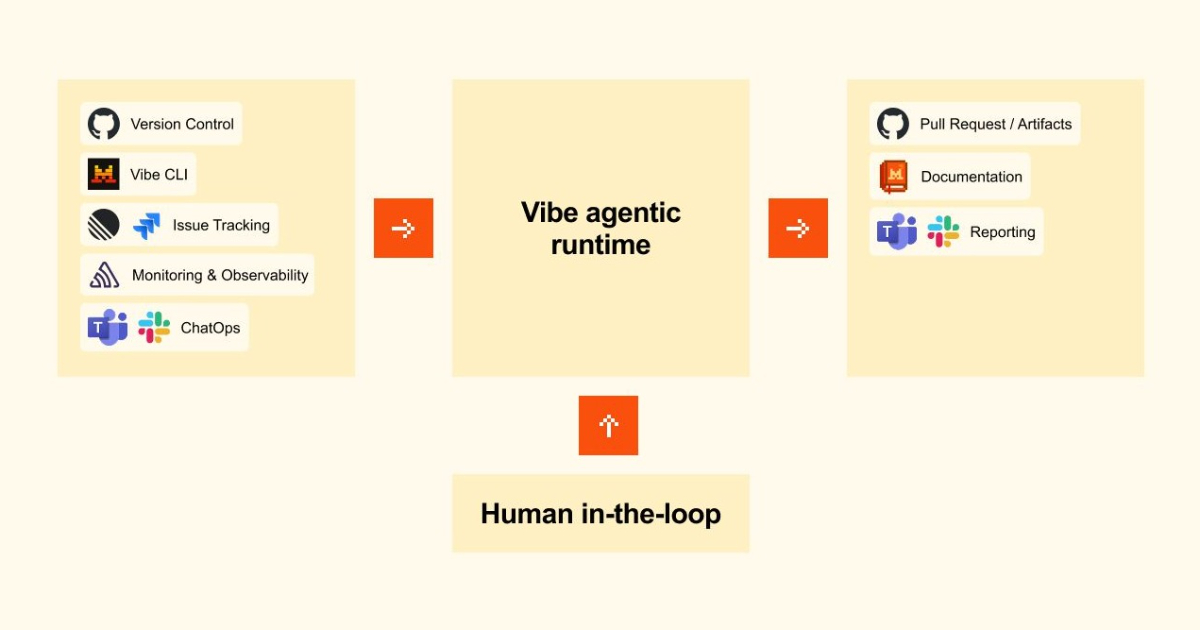
Alongside the model release, Mistral has expanded the functionality of its existing products—Le Chat and Vibe—by introducing remote, cloud-based agent capabilities. These agents operate as persistent, task-oriented assistants that can interact with users across sessions and devices.
How the Agents Work
The new agents leverage Mistral Medium 3.5’s core strengths to perform autonomous actions on behalf of users. For example, a developer using Le Chat could instruct the agent to monitor a code repository, fetch updates, run tests, and report results—all without manual intervention. Similarly, within Vibe, the agents can manage creative workflows, such as drafting content, scheduling posts, or conducting research.
/presentations/game-vr-flat-screens/en/smallimage/thumbnail-1775637585504.jpg)
Key features of the agent system include:
- Persistent Context: Agents maintain memory across interactions, allowing them to build on previous tasks and follow long-term instructions.
- Remote Access: Because the agents run in the cloud, users can invoke them from any device—desktop, mobile, or API endpoint—ensuring continuous productivity.
- Work Mode Integration: The agents can be configured to operate in a "work mode" that prioritizes focus, blocking distractions and executing routine tasks automatically.
Implications for Users
For businesses, these cloud agents represent a shift toward autonomous collaboration, where AI acts not just as a responder but as a proactive participant in projects. Small teams can leverage the reasoning and coding capabilities to accelerate development cycles, while larger enterprises may use the agents for scalable customer support, data analysis, or internal knowledge management.
Mistral’s move also positions Le Chat and Vibe as more than simple conversational interfaces—they are evolving into full-fledged productivity platforms. The integration of remote agents reduces the dependency on local computing resources, making powerful AI accessible to users with modest hardware.
Looking Ahead
The combination of Mistral Medium 3.5’s unified architecture and the new cloud agents signals Mistral’s intent to compete directly with other major AI providers while focusing on practical, deployable solutions. As the company continues to refine its models and expand agent capabilities, users can expect even deeper integration into existing workflows, from coding assistance to enterprise automation.
With this release, Mistral underscores a critical trend in AI: the move from isolated models to intelligent assistants that can act, learn, and adapt within the environments where work actually happens.
Related Articles
- AWS MCP Server Now Available: Secure, Authenticated AI Agent Access to AWS Services
- 7 Crucial Things to Know About Staleness Mitigation in Kubernetes v1.36 Controllers
- Sandboxing AI Agents: Comparing Chroot and systemd-nspawn
- Securing an LLM-Powered MCP Server for a Million-Company B2B Platform on AWS
- Security Blocks ClickHouse Deployment Amid Base Image Vulnerabilities; Docker Hardened Images Emerge as Solution
- How to Set Up AWS Interconnect for Multi-Cloud and Last-Mile Connectivity
- A Step-by-Step Guide to Deploying AWS Interconnect for Multicloud and Last-Mile Connectivity
- Secure AI Agent Access to AWS: The New MCP Server Explained