Revised GUARD Act Still Raises Serious Privacy and Free Speech Concerns
Overview
Lawmakers have recently amended the GUARD Act—a bill originally designed to restrict minors' access to certain AI systems—narrowing its scope in response to widespread criticism. The earlier version threatened to apply to nearly every AI-powered chatbot or search tool; the revised text now focuses more specifically on so-called AI companions: conversational systems that simulate emotional or interpersonal interactions with users. While this change addresses some of the broadest concerns, the bill still introduces significant problems for privacy, online speech, and parental choice.
The Shift from Broad to Narrow
The original GUARD Act drew sharp criticism for its sweeping language, which could have required age verification for everything from customer service bots to educational tools. After feedback, lawmakers narrowed its focus to AI companions—a more targeted category. However, as we explore below, the revised bill retains several troubling provisions.
Age Verification Requirements Remain Intrusive
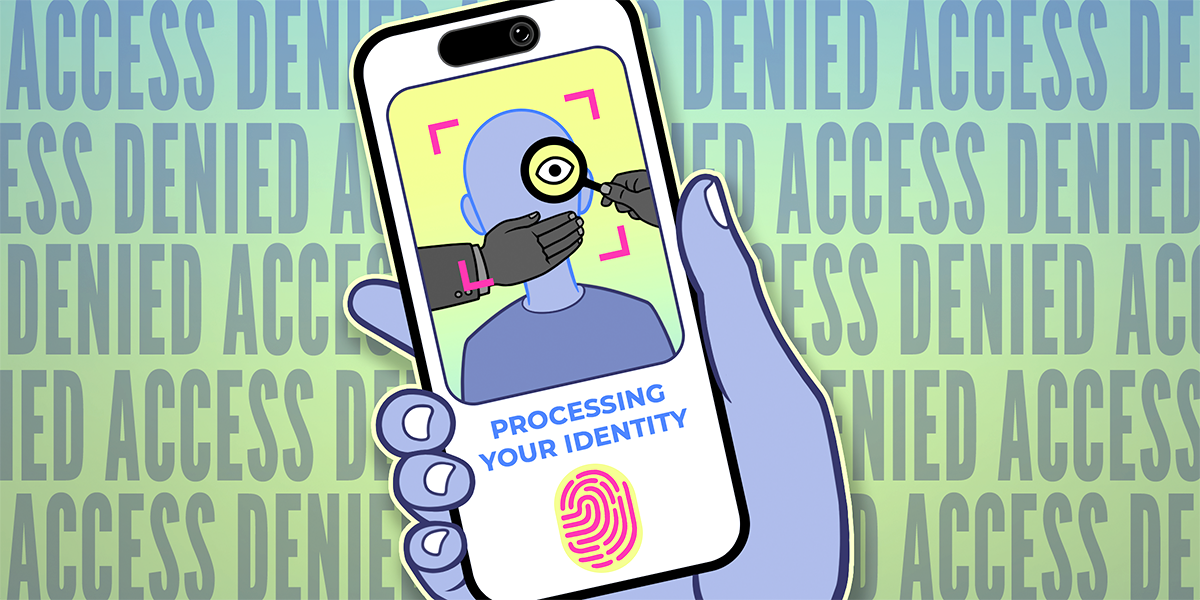
The new version still mandates that companies offering AI companions implement reasonable age verification systems tied to users' real-world identities. Acceptable methods now include financial records or age-verified accounts for mobile operating systems and app stores—a broader list than before, but still intrusive.
Millions of Americans lack current government ID, bank accounts, or stable access to digital identity systems. Even those who have such credentials face risks: linking identity to online speech tools undermines privacy, anonymity, and data security. Many users, understandably, will avoid these services altogether rather than compromise their personal information.
Unclear Definitions and Heavy Penalties
The bill now defines an AI companion as a system that “engage[s] in interactions involving emotional disclosures” from users or presents a “persistent identity, persona or character.” While narrower than before, the definition remains vague at the margins—leaving developers uncertain about which products are covered. At the same time, penalties for noncompliance have been sharply increased, putting companies in a difficult position: they must guess at the law’s boundaries or face severe consequences.

Impact on Families and Parental Choice
Even parents who want their teenagers to use AI companions would face significant hurdles. A family might choose a conversational AI tool to help an isolated teen practice social interaction or engage in harmless roleplay. A military parent deployed overseas might set up a persistent AI storyteller for a younger child. Under the revised bill, these users—and their families—would still have to submit to mandatory age checks tied to sensitive personal or financial information.
This undermines parental choice by imposing a one-size-fits-all verification system, regardless of whether a parent has already given consent. It also creates a chilling effect: the hassle and privacy risk may discourage families from using beneficial AI tools altogether.
Conclusion
The revised GUARD Act is an improvement over its predecessor, but it still attempts to solve a complicated social problem with vague legal standards, heavy liability, and privacy-invasive verification systems. Until lawmakers address these issues more thoroughly, the bill will continue to pose serious threats to online speech, personal privacy, and the ability of families to make their own technology choices.
Related Articles
- The AI Revolution in Software Development: Key Questions Answered
- Harnessing AI for Accessibility: Opportunities and Realistic Progress
- OpenFactBook: The Free Worldwide Resource That Replaced the CIA's Secret Guide
- AWS Weekly Roundup: Claude Opus 4.7 Debuts in Bedrock and Interconnect Goes GA
- Ancient Dingo Burial: Australia's 950-Year-Old Ritual Feasting Grave
- Beyond Metrics: How Leaders Can Unlock Hidden Employee Potential by Nurturing Meaning and Belonging
- Supercharge Your Productivity: 5 Mundane PC Tasks Automated with Claude
- 10 Key Facts About Swift’s Expanding IDE Ecosystem