Why Data Normalization Consistency is Critical for Machine Learning Production Success
Imagine this: your machine learning model passes all tests with flying colors, gets the green light, and heads to production. Within weeks, its predictions start to go off the rails. The usual suspect isn't a flawed algorithm or bad training data—it's a mismatch in data normalization between development and inference. This common yet avoidable pitfall can derail even the most promising models. Normalization is a foundational design choice that determines whether your model trains efficiently, generalizes well, and stays reliable in the real world. As enterprises increasingly integrate generative AI and multi-agent systems into their pipelines, even small normalization inconsistencies can ripple across multiple systems, amplifying errors and degrading performance. Below, we answer key questions about how normalization shapes ML performance and how to keep it consistent for production-grade AI.
What is data normalization in machine learning and why is it so important?
Data normalization is the process of scaling input features to a common range—typically 0 to 1 or with zero mean and unit variance. In machine learning, it prevents features with larger magnitudes from dominating the learning process, which helps gradient-based optimizers converge faster and more stably. For example, if one feature ranges from 1 to 1000 and another from 0 to 1, the model might unfairly emphasize the larger feature. Normalization ensures each feature contributes proportionally. Beyond training, normalization is crucial for model generalization. A model trained on normalized data assumes that production data will undergo the same transformation. When that doesn't happen—say, because the inference pipeline uses different scaling parameters—the model's internal representations misalign, leading to poor predictions or outright failure. Hence, normalization is not a one-time preprocessing step but a design decision that must be consistently applied across all stages of the ML lifecycle.
.jpg)
How does improper normalization cause model drift in production?
Improper normalization is a stealthy cause of model drift. During development, data scientists often normalize training data using statistics (mean, standard deviation) computed from that specific dataset. They then save these parameters and apply them to validation and test sets. However, when the model is deployed, the production inference pipeline may apply a different normalization—perhaps hardcoded min-max values or a rolling window of recent data. This mismatch means the model sees feature distributions that differ from what it learned. Even subtle differences (e.g., a 0.1 shift in mean) can cause predictions to drift over time as production data evolves. The effect compounds when models are retrained or updated: if normalization parameters are not consistently tracked and reused, each retraining cycle can introduce new biases. For enterprises running multiple ML pipelines, these inconsistencies become systemic, undermining trust in AI outputs and requiring constant monitoring and recalibration.
What are the most common normalization mistakes in ML pipelines?
Several normalization mistakes repeatedly plague ML pipelines. First is data leakage: computing normalization statistics on the entire dataset before splitting into train and test sets, which inflates performance metrics. Second, using different normalization techniques in training versus inference—e.g., z-score normalization in development but min-max scaling in production. Third, failing to persist the normalization parameters (like mean and std) from training, leading engineers to recompute them on new data that may have a different distribution. Fourth, applying normalization to categorical or binary features that don't need it, which can distort meaning. Fifth, assuming that normalization is a one-time setup rather than a living part of the pipeline that must be versioned. Finally, for time-series or streaming data, normalizing using global statistics when the data is non-stationary can cause real-time drift. Avoiding these mistakes requires disciplined pipeline design, rigorous testing of transformation consistency, and clear documentation.
How does normalization inconsistency affect generative AI and multi-agent systems?
Generative AI and multi-agent systems rely on complex data flows often sourced from multiple upstream ML pipelines. When normalization is inconsistent across these pipelines, the inputs to generative models can become misaligned. For instance, a text-to-image model might receive image embeddings scaled differently than during training, producing distorted outputs. In multi-agent settings, agents exchange normalized data—if Agent A uses one scaling scheme and Agent B another, the shared feature space becomes fragmented. This degrades cooperation and causes unpredictable behavior. Moreover, because generative models are sensitive to input distributions, even small normalization shifts can lead to hallucinations or low-quality responses. As enterprises expand their AI ecosystems, normalization inconsistencies compound faster and degrade outputs across more systems simultaneously. Standardizing normalization across all pipelines becomes a critical enabler for reliable, scalable AI.
What best practices ensure consistent normalization across training and inference?
Ensuring consistency boils down to three best practices: persist, version, and validate. First, always persist the exact normalization parameters (e.g., mean, std, min, max) computed during training. Store them alongside the model artifact, ideally in a metadata registry. Second, version both the normalization logic and parameters just like you version your model code. This allows reproduction of any inference run. Third, validate that the inference pipeline applies the exact same transformation by running end-to-end tests that compare output for a fixed input between training and production environments. Additionally, use standard libraries (e.g., scikit-learn's StandardScaler) with serialization support. For streaming data, use adaptive normalization that updates parameters slowly under control. Finally, enforce a single normalization strategy across all pipelines through centralized transformation services or shared configuration files. Teams should also include a checklist of common mistakes in their code review process.
How can teams standardize normalization for production-grade AI?
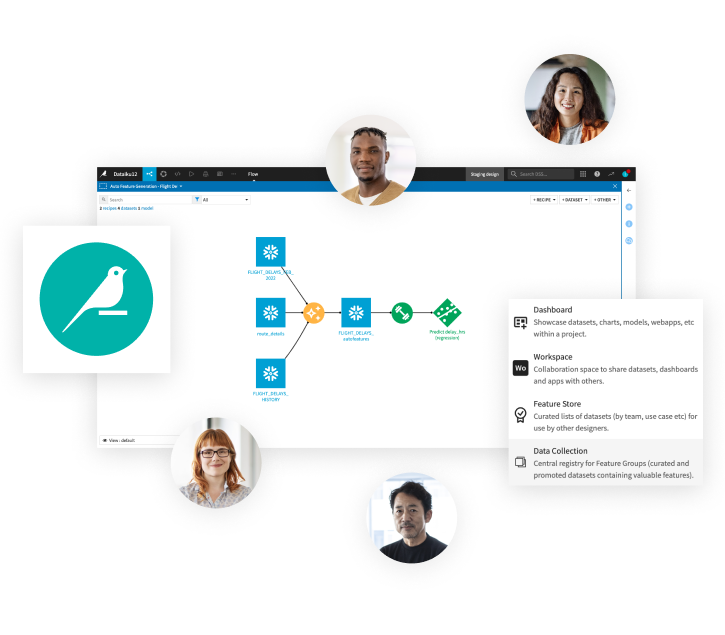
Standardizing normalization requires both technical and organizational shifts. Technically, adopt a feature store or transformation service that centralizes normalization logic. All ML pipelines (training, batch inference, real-time serving) call the same service, ensuring one version of the truth. Use containerized environments with locked library versions to prevent drift. Implement automated drift detection that monitors how input distributions change versus the training normalization baseline. Organizationally, create clear ownership of the normalization layer—assign a team to maintain it as a shared infrastructure component. Document decisions (e.g., why z-score vs. min-max) and train all data scientists on the pitfalls. Regularly audit pipelines for normalization consistency using regression tests. Finally, treat normalization as part of the model card or manifest, so that every deployed model records its exact preprocessing steps. These tactics transform normalization from an afterthought into a robust, production-grade asset.
Related Articles
- The SoundCloud Era and Billie Eilish’s Unique Path: A Look at the Future of Music Discovery
- IBM Vault 2.0 Streamlines Secrets Management with Enhanced Usability and Reporting
- How to Integrate Coursera’s Learning Agent into Microsoft 365 Copilot: A Step-by-Step Guide
- Optimizing LLM Memory with TurboQuant: A Q&A Guide
- Human Expertise: The Real Driver of AI Success in 2025
- Navigating the Coursera-Udemy Merger: A Learner's Action Guide
- Kubernetes v1.36: 8 Things You Need to Know About Mutable Pod Resources for Suspended Jobs (Beta)
- How a Self-Taught Coder Created an AI Agent to Crack Leaderboards