How AI and a Revolutionary Observatory Could Finally Explain Dark Energy
For decades, dark energy has stood as one of the most perplexing puzzles in cosmology. This mysterious force, which makes up about 68% of the universe, is driving the accelerated expansion of the cosmos. Yet, its true nature remains unknown. Now, a powerful combination of cutting-edge artificial intelligence (AI) and data from the upcoming Vera C. Rubin Observatory promises to shed new light on this cosmic mystery, particularly by rethinking the way we use standard candles – supernovae that have been crucial in measuring cosmic distances.
The Dark Energy Enigma
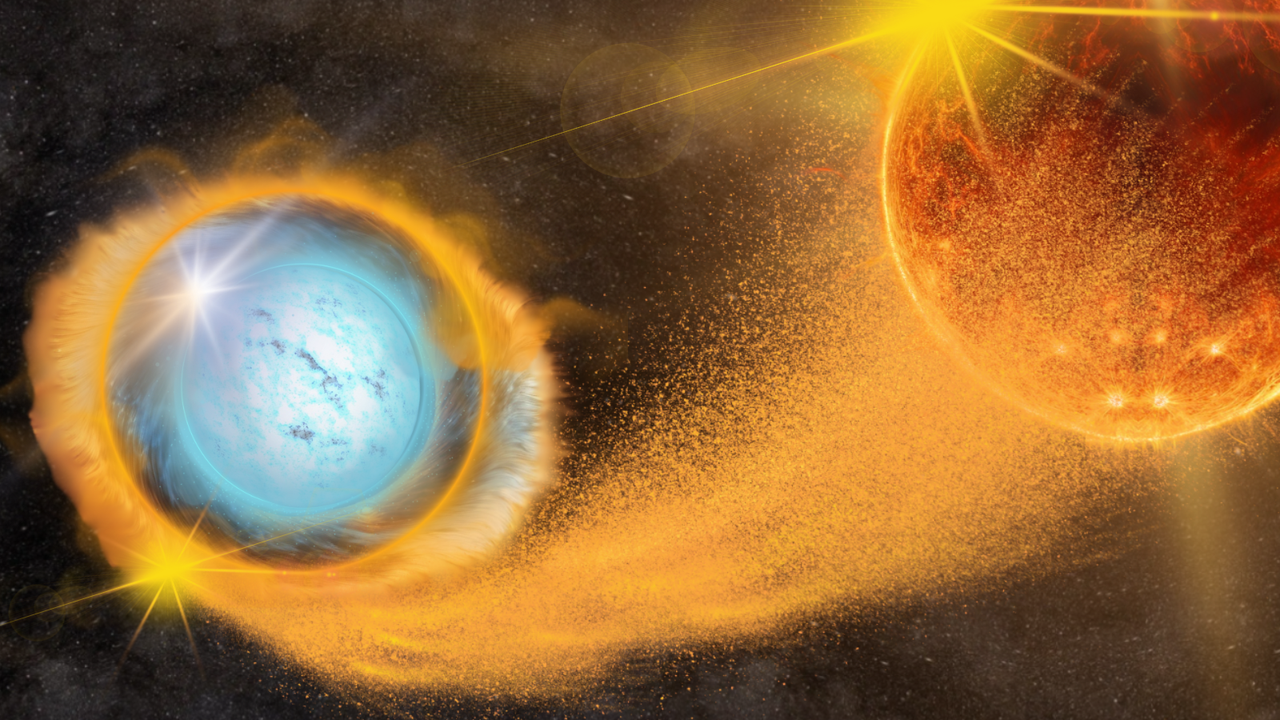
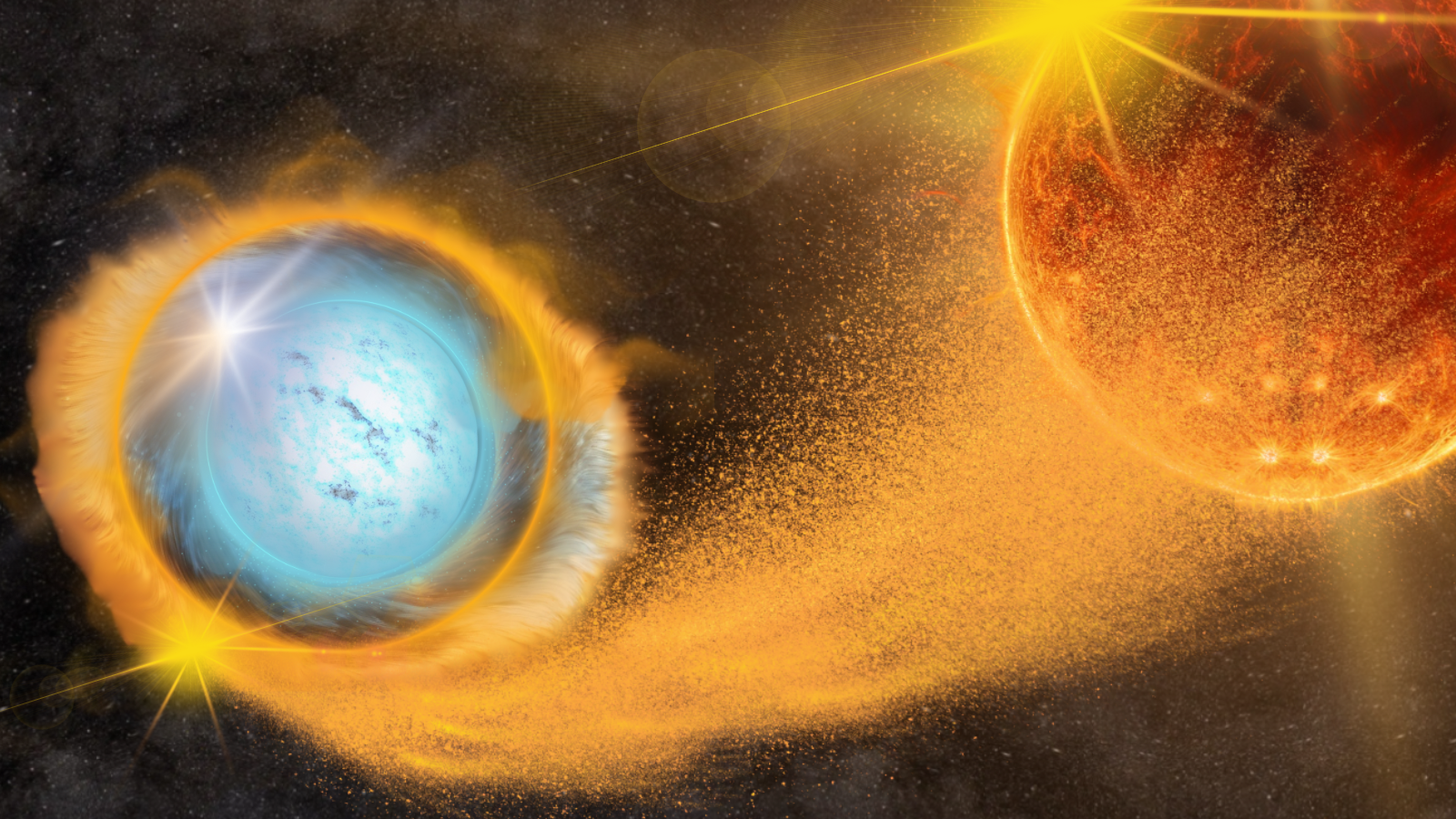
Dark energy was first inferred in the late 1990s from observations of distant Type Ia supernovae. These stellar explosions are remarkably consistent in brightness, allowing astronomers to calculate their distance from Earth with high precision. By comparing their apparent brightness to their known intrinsic brightness, scientists could map the expansion history of the universe. The shocking discovery was that the expansion is not slowing down due to gravity, but accelerating – a phenomenon attributed to dark energy. However, standard candles are not perfectly uniform; subtle variations in their properties can introduce uncertainties. This is where AI and the Rubin Observatory come into play.
The Vera C. Rubin Observatory: A Game Changer
Situated on Cerro Pachón in Chile, the Rubin Observatory will conduct the Legacy Survey of Space and Time (LSST) – a decade-long project that will repeatedly image the entire southern sky. It will detect billions of galaxies and millions of Type Ia supernovae, far more than any previous survey. The sheer volume of data is unprecedented, but it also presents a challenge: how to analyze it all efficiently? Traditional methods would be overwhelmed. This is where AI steps in, acting as a virtual assistant to sift through the cosmic haystack.
Artificial Intelligence Meets Astronomy
Machine learning algorithms are being trained to identify and classify supernovae from LSST data with incredible speed and accuracy. But more importantly, AI can uncover "unknown unknowns" – subtle patterns or correlations that humans might miss. For example, AI might detect that the brightness of a Type Ia supernova correlates with the chemical composition of its host galaxy, or with the age of the progenitor star system. Such insights could refine the standard candle model, reducing systematic errors.
Hunting for 'Unknown Unknowns'
The phrase "unknown unknowns" refers to factors we don't even know we should be looking for. In the context of dark energy research, there could be hidden biases in how supernovae are selected or calibrated. AI can help by autonomously exploring millions of possible relationships in the data, flagging anomalies that contradict existing models. For instance, it might discover that a certain subclass of supernovae are not as standard as assumed, or that dust extinction effects are more complex than current models account for. By correcting for these unknowns, scientists hope to get a clearer measurement of the cosmic expansion history, which in turn might reveal new clues about dark energy.
Rewriting the Cosmic Recipe
Currently, our cosmological model – Lambda-CDM – includes dark energy as a constant (the cosmological constant, Lambda). But its value seems unnaturally small, and some theories suggest it might be dynamic. If AI and Rubin data reveal that standard candle distances are systematically off, it could imply that dark energy's behavior is different from the simple constant. Alternatively, it might point to a breakdown of general relativity on cosmic scales. Either way, the combination of massive data and intelligent analysis could lead to a revised recipe of the universe.
What the Future Holds
With the Rubin Observatory expected to begin full operations by 2025, scientists are already developing and testing AI pipelines. Preliminary studies using simulated data show that machine learning can improve distance estimates by up to 30%. When real data arrives, the hope is to reduce uncertainties in the dark energy equation of state parameter to well below 1%. This would be a major leap toward understanding whether dark energy is a cosmological constant, a new field, or something entirely unexpected.
In summary, the quest to decode dark energy is entering an exciting new phase. By rethinking our use of Type Ia supernovae as standard candles, leveraging the Rubin Observatory's vast sky survey, and employing artificial intelligence to find hidden patterns, astronomers are poised to either confirm our current picture or uncover the missing ingredients in the cosmic recipe. The next few years could be revolutionary for cosmology.
Related Articles
- Understanding Chrome's Hidden 4GB AI Model: What It Is and How to Manage It
- How Astronomers Cracked the 50-Year-Old Gamma-Cas X-Ray Mystery
- Exploring Reality Through Bohmian Mechanics: A Q&A Guide
- Where Do You Feel Your Self? The Surprising Impact on Your Life
- 10 Breakthroughs Powering NASA's Next-Generation Mars Helicopters
- How Tectonic Forces Carved the Twelve Apostles: A Step-by-Step Geological Guide
- Vaonis Unveils Vespera III and Vespera Pro 2: Sharper Optics and Enhanced Stargazing Experience
- 10 Fascinating Facts About the Spiral Galaxy NGC 3137