10 Fascinating Facts About the Vera C. Rubin Observatory and Its Cosmic Quest
The Vera C. Rubin Observatory, perched on the Cerro Pachón summit in Chile’s Atacama Desert, is poised to revolutionize our understanding of the cosmos. Originally conceived in the 1990s as the Dark Matter Telescope, this state-of-the-art facility will conduct the Legacy Survey of Space and Time (LSST), imaging the entire visible sky every few nights for a decade. Its unprecedented power will track everything from skyscraper-size asteroids to failed supernovas and interstellar visitors. Here are ten things you need to know about this astronomical game-changer.
1. A Prime Location for Clarity
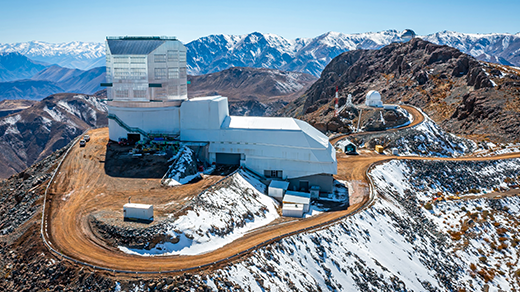
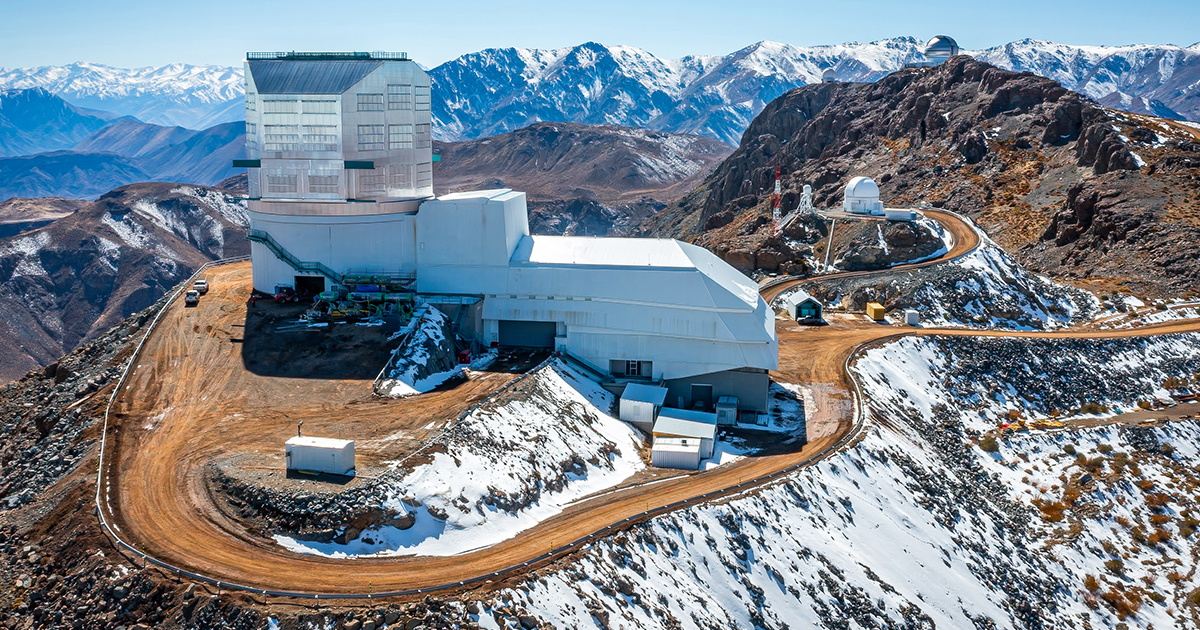
The Rubin Observatory sits atop Cerro Pachón, a 2,682-meter peak in Chile’s Atacama Desert—one of the driest and darkest places on Earth. This location offers more than 300 clear nights per year, minimal light pollution, and stable atmospheric conditions. The high altitude reduces atmospheric distortion, allowing the telescope to capture crisp images across a vast field of view. Originally scouted in the mid-1990s, the site was chosen to maximize observing efficiency for the Dark Matter Telescope concept that evolved into Rubin.
2. From Dark Matter Telescope to LSST
Envisioned as the Dark Matter Telescope, the project’s primary goal was to map dark matter’s distribution through gravitational lensing. Over time, its mission expanded into the Legacy Survey of Space and Time (LSST), a decade-long cosmic census. The LSST will catalog billions of galaxies, stars, and solar system objects, probing dark energy, dark matter, and transient phenomena. This evolution reflects Rubin’s potential to answer fundamental questions about the universe’s composition and evolution.
3. The World’s Largest Digital Camera
At the heart of Rubin is the 3.2-gigapixel LSST Camera—the largest digital camera ever built for astronomy. About the size of a small car, it captures a 9.6-square-degree field of view, covering an area 40 times the size of the full Moon in a single exposure. With 189 sensors, it can detect objects from near-Earth asteroids to distant supernovae. Each night, the camera generates 20 terabytes of data, which will be processed and analyzed in near real-time.
4. Scanning the Entire Sky Every Few Nights
Rubin’s unique observing strategy: it will image the entire southern sky every three to four nights using a pair of 15-second exposures. This rapid cadence means that any moving or changing object—like an asteroid or a supernova—will be spotted quickly. Over a decade, each patch of sky will be imaged about 1,000 times, creating a dynamic movie of the cosmos. This time-domain approach is key to tracking rare and fleeting events.
5. Tracking Skyscraper-Size Asteroids
One of Rubin’s core missions is to detect near-Earth objects (NEOs), including asteroids larger than 140 meters—the size of a skyscraper. By scanning the sky repeatedly, it is expected to discover tens of thousands of new NEOs, potentially identifying hazardous ones decades before a potential impact. Combined with its wide field and sensitivity, Rubin will provide a comprehensive catalog of space rocks, vastly improving our planetary defense capabilities.
6. Catching Failed Supernovas
Failed supernovas—massive stars that collapse directly into black holes without a visible explosion—are incredibly hard to detect. Rubin’s ability to monitor millions of galaxies repeatedly gives it a chance to catch these “now-you-see-me-now-you-don’t” events. By spotting the sudden disappearance of a star, astronomers can confirm a failed supernova and study the birth of a black hole. This will help refine models of stellar evolution and black hole formation.
7. Welcoming Interstellar Visitors
Interstellar objects like ‘Oumuamua and 2I/Borisov have sparked excitement and mystery. Rubin’s deep, rapid surveys are expected to detect many more such visitors. By observing their trajectories and compositions, scientists can learn about the diversity of planetary systems across the galaxy. Rubin’s data will also help distinguish between interstellar comets and asteroids, offering a window into the building blocks of exoplanets.
8. A Decade of Unprecedented Data
Over ten years, the LSST will produce an estimated 60 petabytes of raw data. This includes 200 billion galaxies, 17 billion stars, and 6 million solar system objects. The data will be made publicly available as “Data Releases” through the Rubin Science Platform. The scale of this dataset is astronomical—literally—and will fuel discoveries for generations to come, from mapping dark matter halos to finding gravitational wave counterparts.
9. Open Science for Everyone
Rubin is committed to open science: all data, software, and alerts will be freely accessible worldwide. The project has built the “Science Platform” for real-time analysis, allowing anyone from professional astronomers to amateur enthusiasts to study the cosmos. Alerts of transient events like supernovae or asteroids will be issued within 60 seconds of detection via brokers such as ANTARES and Lasair. This democratization of astronomy could lead to crowd-sourced discoveries.
10. A New Era of Time-Domain Astronomy
Rubin will usher in the era of time-domain astronomy, where the sky is not a static map but a dynamic, changing landscape. By observing variability across timescales from seconds to years, it will uncover everything from exoplanet transits to tidal disruption events. Combined with gravitational wave and neutrino observatories, Rubin will enable multimessenger astronomy, offering holistic views of cosmic phenomena. Its legacy will be a vastly improved understanding of the universe’s past, present, and future.
The Vera C. Rubin Observatory is not just another telescope—it is a lens into the dynamic universe. From defending Earth against asteroid impacts to revealing the life cycles of stars and welcoming interstellar nomads, its LSST will transform our cosmic perspective. As first light approaches, anticipation builds for a decade of discovery that will reshape astronomy for generations.
Related Articles
- 10 Surprising Revelations About Fat Metabolism That Challenge Decades of Scientific Dogma
- Exploring the Mission of Astronauts for America: Key Insights from Space Leaders
- The Evolution of IVF: A Step-by-Step Guide to How Technology Revolutionized Reproductive Medicine
- 10 Essential Insights into Harness Engineering for Coding Agent Users
- New Study Reveals Favorite Playlist Can Extend Exercise Duration by 20%
- In The Black Q&A: Inside the Newtonian Space Combat Sim from X-Wing and MechWarrior Veterans
- Ireland to Sign Artemis Accords: Expanding Global Cooperation in Space Exploration
- The Brain's Built-in 'Stop Scratching' Mechanism: New Research Reveals a Molecular Brake for Itch Relief